


 Tiếng Việt

Revenue is growing, but profitability remains stagnant. The organizational structure is becoming increasingly cumbersome, operational processes lack coordination, and leadership is constantly dealing with emerging problems. These are warning signs that the existing management system may no longer align with the company’s size and strategic direction.
Business restructuring is not merely a solution for organizations facing difficulties, but also a proactive strategy to optimize resources, enhance operational efficiency, and establish a solid foundation for sustainable growth.
So, what are the warning signs that a business needs restructuring, and where should it begin to ensure that the transformation delivers meaningful results?
1. What is Business Restructuring?

Business restructuring is the process of evaluating, adjusting, and reorganizing management systems, organizational structures, operational processes, or business models to improve operational efficiency and achieve strategic objectives.
Depending on its current circumstances, a business may focus its restructuring efforts on the following areas:
- Organizational Structure: Streamline the organizational structure and clearly define functions, responsibilities, and authority.
- Operational Processes: Standardize workflows, eliminate waste, and improve productivity.
- Management Systems: Strengthen delegation of authority, internal controls, and performance evaluation mechanisms.
- Human Resources: Optimize resource allocation and develop workforce capabilities.
- Business Strategy: Adjust the operating model to align with market conditions and strategic growth objectives.
Business restructuring does not necessarily mean reducing headcount or downsizing operations. Its essence lies in building a more efficient, flexible management system that aligns with each stage of the company’s development.
2. Seven Signs Your Business Needs Restructuring

2.1. Cumbersome Organizational Structure and Overlapping Roles and Responsibilities
As a business expands, the number of departments and management levels often increases. If the organizational structure is not adjusted accordingly, it can become overly complex, reducing coordination efficiency and slowing down decision-making.
Common warning signs:
- Multiple departments perform similar tasks.
- Approval processes involve too many levels of management.
- Responsibilities and authority are not clearly defined.
- Senior management frequently intervenes in day-to-day operations.
An inefficient organizational structure not only increases administrative costs but also limits employee autonomy and initiative.
Businesses need to review the functions of each department, refine their delegation of authority, and establish clear coordination mechanisms. Implementing the RACI responsibility matrix can help clarify the roles and responsibilities of individuals and departments in carrying out tasks.
2.2. Rising Operating Costs Without Improved Business Performance
Rising costs are often inevitable as a business expands its operations. However, if costs increase without corresponding improvements in productivity and business performance, this may indicate inefficient resource utilization.
Common issues include:
- Rising administrative and indirect costs.
- Labor productivity that is not commensurate with workforce size.
- Excessive inventory levels tying up working capital.
- Additional costs arising from errors, rework, and delays.
Rather than focusing solely on cost reduction, businesses need to identify the root causes of non-value-added expenditures.
Combining business restructuring with Lean Management practices enables businesses to identify waste, optimize processes, and improve resource utilization without compromising product or service quality.
2.3. Complex Operational Processes and Poor Cross-Departmental Coordination
Operational efficiency depends not only on the capabilities of individual departments but also on the ability to coordinate effectively across the entire organization.
When departments operate in isolation without effective coordination, businesses are more likely to experience information discrepancies, duplicated work, prolonged waiting times, and missed deadlines.
For example, the sales department may commit to delivery dates without adequately assessing production capacity and raw material availability. This can lead to changes in production plans, additional costs, and damage to the company’s reputation.
In this case, improving the performance of individual departments in isolation may not necessarily resolve the underlying problem.
Businesses need to review end-to-end processes, identify bottlenecks, standardize working methods, and establish consistent information-sharing mechanisms. Tools such as Value Stream Mapping (VSM) and Standard Work can support this process.
2.4. KPI Systems That Fail to Accurately Reflect Business Performance
Many businesses have established KPI systems, yet their performance evaluation results fail to accurately reflect actual business performance.
This situation often stems from KPIs that are poorly aligned with strategic objectives, an excessive focus on the volume of work performed, or a lack of alignment across departments.
For example, the purchasing department may be evaluated based on its ability to reduce procurement costs, while the production department prioritizes raw material quality. Optimizing the KPIs of one department may inadvertently increase costs or undermine the overall performance of the business.
When all departments meet their KPIs but the business fails to achieve its overall objectives, the performance management system needs to be reassessed.
Businesses need to develop a strategy-aligned KPI system that ensures consistency between organizational objectives, departmental goals, and individual performance. KPIs should serve as a tool for effective management and continuous improvement rather than merely for periodic performance evaluations.
2.5. Low Employee Motivation and Difficulty Retaining Talent
Inefficiencies in organizational structures and management practices can directly affect employee engagement.
When responsibilities are not matched by appropriate authority, performance evaluation mechanisms lack transparency, or career development opportunities are unclear, employees are more likely to lose motivation and become less committed to the organization.
Rising employee turnover, persistent internal conflicts, and shortages of skilled personnel are warning signs that businesses should pay close attention to.
However, not all workforce-related issues stem from the organizational structure. Businesses need to combine HR data analysis, employee engagement surveys, and assessments of management practices to identify the underlying causes.
If these issues stem from the delegation of authority, performance evaluation mechanisms, or management models, business restructuring can help create a more transparent working environment, unlock workforce potential, and improve overall performance.
2.6. Business Growth Outpaces Management Systems
A management model that works well for a small business may no longer meet organizational needs as the company expands, establishes additional branches, or diversifies its business activities.
Common challenges that emerge during periods of growth include:
- Excessive reliance on founders or senior management in day-to-day operations.
- Middle management capabilities that fall short of organizational requirements.
- Lack of standardized processes and reporting systems.
- Difficulty monitoring and managing operational performance across business units.
Without timely adjustments, the management system itself can become a barrier to further business growth.
Business restructuring at this stage should focus on establishing an effective delegation of authority, standardizing processes, strengthening middle management capabilities, and gradually transitioning from individual-dependent management to a system-based management approach.
2.7. Slow Adaptation to Market and Technological Changes
Evolving market conditions, customer needs, and technological advancements place increasingly greater demands on a business’s ability to adapt.
An inflexible management system can slow decision-making, hinder new product launches, lead to missed business opportunities, and weaken the company’s competitiveness.
In particular, many businesses invest in software and technology but fail to achieve the expected results due to a lack of standardized processes, inconsistent data, and unclear management responsibilities.
Digital transformation cannot replace an effective management system.
Businesses need to improve operational processes, strengthen management mechanisms, and develop workforce capabilities simultaneously to establish a solid foundation for technology adoption. This is also one of the key objectives of business restructuring in the context of digital transformation.
3. When Should a Business Begin Restructuring?
Businesses do not need to wait until revenue declines, profitability deteriorates, or operations fall into crisis before initiating restructuring.
The right time to reassess the management system is when multiple issues arise simultaneously, persist over time, recur frequently, or cannot be effectively resolved through isolated improvement initiatives.
Senior management should consider three key factors:
- Does the current management system still align with the company’s growth strategy?
- Are operational issues systemic in nature?
- Do existing improvement initiatives effectively address the root causes?
The assessment results will help businesses determine the appropriate scope of change, ranging from departmental adjustments and process improvements to comprehensive business restructuring.
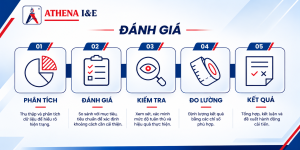
4. A Five-Step Roadmap for Effective Business Restructuring
To minimize risks and ensure feasibility, business restructuring should follow a systematic implementation roadmap.
Step 1: Conduct a Comprehensive Assessment of the Current State
Review the organizational structure, operational processes, management systems, human resources, and performance data to identify critical issues.
Step 2: Define Restructuring Objectives and Scope
Identify priority issues, establish improvement objectives, and develop appropriate performance metrics aligned with the company’s growth strategy.
Step 3: Design an Appropriate Management Model
Adjust the organizational structure, clearly define departmental functions, standardize processes, and refine the performance management system to suit the company’s specific needs and operating characteristics.
Step 4: Implement Restructuring and Manage Change
Develop an implementation plan, establish effective internal communication, provide employee training, and implement solutions in phases to minimize operational disruptions.
Step 5: Measure Performance and Drive Continuous Improvement
Monitor results using key metrics related to productivity, costs, quality, and operational efficiency. Based on these findings, refine solutions and sustain improvement outcomes over the long term.
Throughout the implementation process, businesses should avoid focusing solely on workforce reductions, replicating management models from other organizations, or introducing too many changes simultaneously without clear objectives and a well-defined roadmap.
5. Athena I&E – Your Partner in Business Restructuring
Business restructuring goes beyond changing the organizational structure. It is a comprehensive process of strengthening management systems, enhancing operational capabilities, and building a solid foundation for sustainable growth.
With expertise in business management consulting, Lean Management, performance management, and process improvement, Athena I&E Corporation is committed to delivering tailored solutions aligned with each organization’s current circumstances, available resources, and strategic growth objectives.
Through comprehensive assessments, root cause analysis, and the development of improvement roadmaps, Athena I&E supports businesses in:
- Refining organizational structures and strengthening management systems.
- Standardizing processes, optimizing resources, and reducing waste.
- Developing performance management systems aligned with strategic objectives.
- Enhancing management and workforce capabilities.
- Building a solid management foundation to support business growth and digital transformation.
Proactive restructuring at the right time not only helps businesses address existing challenges but also strengthens their competitiveness and ability to adapt to future changes.
Contact Athena I&E to explore business restructuring consulting solutions tailored to your organization’s strategic growth objectives.
Head Office: 14th Floor, HM Town Building, 412 Nguyen Thi Minh Khai Street, Ban Co Ward, Ho Chi Minh City, Vietnam
Hotline: 1900 8622
Email: Contact@athenacorp.vn
Website: www.Athenacorp.vn
